Owner’s manual
 Error Codes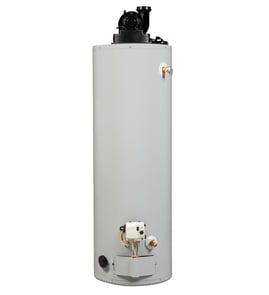





What are the most common issues with L40S62-403?
The most common issues we see on the American Water Heaters L40S62-403 gas water heater are “no hot water” (pilot will not stay lit), inconsistent water temperature, reduced hot-water volume, and small leaks at service points like the drain valve. Many of these problems trace back to the pilot/ignition system, burner components, or normal tank maintenance.
- Pilot will not light or won’t stay lit: pilot/igniter problems, dirty burner area, or control issues (often involves the water heater pilot and igniter assembly 100093983).
- No hot water or weak heating: burner not firing correctly (may involve the water heater burner assembly 100094004) or a control problem.
- Hot water runs out faster than normal: dip tube worn or broken (often involves the water heater dip tube 100110924) or heavy sediment reducing usable tank volume.
- Water too hot or not hot enough: temperature setting, sensor/control behavior, or combustion issues.
- Water leaking from the drain area: drain valve not sealing (often involves the drain valve 100108269).
- Rumbling, popping, or sizzling sounds: sediment buildup on the bottom of the tank.
- Confirm the gas supply valve is fully open.
- Verify the thermostat/temperature setting is appropriate.
- Look through the burner view area for signs of sooting, debris, or corrosion.
- Check for water around fittings (especially at the drain valve and piping connections).
- If hot water volume is low, plan a tank flush and inspect the dip tube.
| Symptom | Part commonly involved | What it does |
|---|---|---|
| Pilot won’t stay lit | Water heater pilot and igniter assembly | Lights and proves flame so the gas valve can stay open |
| Poor heating/no heat | Water heater burner assembly | Provides the main flame to heat the tank |
| Runs out of hot water fast | Water heater dip tube | Directs incoming cold water to the bottom of the tank |
| Leak at drain | Drain valve | Allows draining and flushing; must seal tightly |
Ignoring ignition, burner, or sediment issues can reduce efficiency, shorten tank life, and increase the chance of nuisance shutdowns. Addressing the root cause early keeps recovery time and hot-water capacity consistent.
For model-specific lighting, shutdown, and maintenance steps, follow the L40S62-403 owner’s manual.
Last updated: March 2026
What is the average labor cost to install a 40 gallon gas water heater?
For an American L40S62-403 40-gallon gas water heater, average labor to install typically runs $300 to $800 for a straightforward replacement. Costs rise when the job needs venting changes, gas-line work, permits, or code upgrades; those installs commonly land $1,000+.
- Swap vs. new install: replacing an existing gas water heater is usually faster than adding one.
- Venting complexity: long vent runs, extra elbows, or chimney issues add time.
- Gas piping changes: new shutoff, sediment trap, or resizing the gas line increases labor.
- Location difficulty: tight closets, attics, crawlspaces, or upper floors take longer.
- Code and safety items: combustion air, clearances, and required valves can add steps.
- Permits and inspection: often billed separately from labor.
Most plumbers price by the hour or by the job. A common hourly range is $75 to $200/hour, and many basic replacements take 3 to 4 hours.
| Install scenario | Typical labor time | Typical labor cost |
|---|---|---|
| Like-for-like replacement (existing vent and gas line) | 3 to 4 hours | $300 to $800 |
| Replacement with venting or gas-line modifications | 4 to 8+ hours | $800 to $1,500+ |
| New location or major rework (gas, vent, water piping) | 1 to 2 days | $1,500 to $2,500+ |
The L40S62-403 is a Category I, non-direct vented gas water heater; correct venting, combustion air, and location clearances are essential for safe operation and reliable performance. Use the L40S62-403 owner's manual to confirm installation checklist items before scheduling work.
- Clear access to the heater, vent connection, and gas shutoff.
- Confirm the vent path is short and direct (minimal elbows).
- Plan for a drain location for tank draining and startup flushing.
- Ask the installer to itemize: labor, permit, disposal, and any code parts.
Last updated: January 2026
What is the lifespan of a 40 gallon gas water heater?
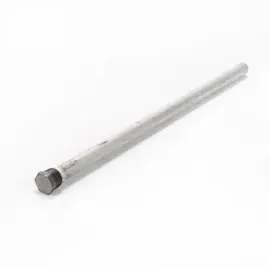
A 40-gallon gas tank water heater typically lasts 10 years. For the American L40S62-403, lifespan is driven most by corrosion inside the tank; keeping the anode rod in good shape is the biggest factor in reaching (or beating) that 10-year mark. See the maintenance guidance in the L40S62-403 manual.
Most gas tank water heaters fail from internal tank corrosion or combustion-related wear. These factors shorten life the fastest:
- Depleted anode rod (tank starts corroding once the rod is used up)
- Hotter temperature settings (accelerates anode depletion and scale)
- Hard water and sediment buildup (reduces efficiency and stresses the tank)
- High hot water usage (more burner cycles and wear)
- Water softeners and certain water chemistry (can increase anode depletion rate)
| Water conditions and maintenance | Typical outcome | What to do now |
|---|---|---|
| Average water, minimal maintenance | About 10 years | Plan for proactive maintenance and budgeting |
| Hard water, high temp setting, no flushing | Often shorter than 10 years | Flush sediment and check anode condition |
| Regular flushing plus anode replacement as needed | Often 10+ years | Keep a simple annual maintenance routine |
These steps help protect the tank and keep the gas burner system running efficiently:
- Inspect and replace the anode rod when needed; the tank starts corroding once it is depleted
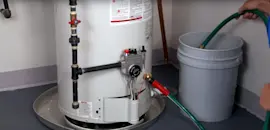
- Flush sediment from the tank periodically (especially with hard water)
- Check for slow leaks at fittings and the drain valve
- Keep the burner area clean and unobstructed for proper combustion air
- Follow the safety and operating guidance in the L40S62-403 manual
If you are already seeing seepage at the drain outlet, replacing the drain valve 100108269 can stop a small leak and make future flushing easier.
A gas water heater can look fine externally while the glass-lined tank is corroding internally. The anode rod is designed to “sacrifice” itself to protect the tank; maintaining it is the most direct way to extend the service life of the American L40S62-403.
Last updated: January 2026